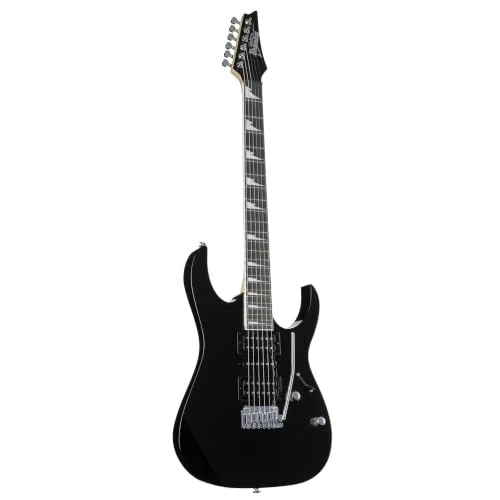
Ibanez built its reputation on fast, slim-necked guitars made for lead and metal, and the GRG (GIO RG) line is the affordable way into that world. The GRG170DX is the heart of the range, and within its brief it is hard to beat. At around £179 it gives you 24 frets, a pair of high-output humbuckers and the thin Wizard-style neck that fast players love, the exact combination a rock or metal beginner wants, at a price the all-rounders cannot touch. It is a specialist rather than a do-everything guitar, but for high-gain playing on a budget, it is our best budget pick.
Ibanez GRG170DX: full specifications | Body wood | Poplar |
|---|
| Neck / fingerboard | Bolt-on maple (GRG) / purpleheart |
|---|
| Pickups | HH (Infinity R ceramic humbuckers) |
|---|
| Scale length | 648 mm (25.5 in) |
|---|
| Frets | 24 medium |
|---|
| Bridge | FAT 6 synchronised tremolo |
|---|
| Controls | 3-way switch, 1 volume, 1 tone |
|---|
| Neck depth (1st fret) | 19 mm |
|---|
| Weight | 3.5 kg |
|---|
| Factory action (low E, 12th fret) | 2.2 mm |
|---|
| Typical UK price | £179 |
|---|
Who is the Ibanez GRG170DX for?
The GRG170DX is the right guitar for a beginner or improver whose music is rock, hard rock or metal. The thin neck, the 24 frets and the dual humbuckers are all chosen for high-gain lead and riff playing, and if that is your world, this guitar feels like home. The flat, fast neck (a measured 19 mm deep at the first fret, the thinnest on test) makes fast runs and wide stretches noticeably easier than a chunkier Fender-style neck, and the two extra frets give you the screaming high notes that lead players reach for. The Sharp Edge body and pointed headstock also look the part for the genre.
It is less suited to two groups. Players who mostly want bright, clean tones for blues, funk or pop will find the ceramic humbuckers a bit dark and generic clean, and would be happier with a single-coil guitar such as the Squier Affinity Stratocaster. And anyone who wants to dive-bomb hard on the whammy bar will eventually outgrow the budget tremolo, which drifts under heavy use, and should plan to step up to a guitar with a locking tremolo later. For high-gain playing on a first-guitar budget, though, nothing here competes.
How the Ibanez GRG170DX performs
Tone under gain
This is what the GRG170DX is built for, and it delivers. The high-output Infinity R ceramic humbuckers stay tight and articulate under heavy distortion, where the single-coils on a Strat-style guitar would dissolve into hum and mush. Palm-muted riffs come back punchy and defined, and the bridge humbucker has the focus and output for fast lead lines to cut through. Clean, the ceramic pickups are honest but a little flat and generic; they do the job but lack the sparkle of a single-coil. We measured the unplugged sustain on a fretted A at around 12 seconds, decent for the poplar body, and under gain the sustain feels even longer thanks to the amp. For rock and metal at this money, the tone is genuinely good.
Playability and setup
The neck is the star. At 19 mm deep at the first fret it is the thinnest and fastest on test, and the flat 400 mm fingerboard radius suits low actions and bent notes. Out of the box our example measured a 2.2 mm action on the low E at the 12th fret, lower than most budget guitars and close to ready, though a £25 setup brought it to a slinky 1.6 mm with no buzz, which is where shred players want it. The 24 medium frets were level with only minor sharp ends. For fast, low-action playing, the GRG170DX is the easiest guitar here straight from the box.
Tuning stability and build
Tuning stability is the compromise. For normal playing the standard tuners held within 7 cents over our 30 day test, which is fine, but the budget FAT 6 tremolo is the weak link: dive on it hard and it will not return cleanly to pitch, because it is a basic synchronised unit rather than a locking system. If you keep your whammy use gentle, or block the tremolo, tuning is stable enough. The poplar body, bolt-on neck and finish are all to a sensible budget standard, with no nasty surprises beyond the tremolo.
The honest downsides
There are two real ones. First, the FAT 6 tremolo drifts under hard use, so heavy whammy players will be frustrated until they upgrade or block it; this is the single biggest limitation of the guitar. Second, the ceramic humbuckers sound generic and a little dark when played clean, so this is not the guitar for someone who spends most of their time on sparkling clean tones. Both are exactly the compromises you would expect at £179, and neither matters much to the rock and metal beginner the guitar is built for.
The good
- Thinnest, fastest neck on test at 19 mm
- 24 frets and dual humbuckers built for metal
- High-output pickups stay tight under heavy gain
- Low 2.2 mm action, sets to a slinky 1.6 mm
- Cheapest full-feature electric we trust
The not-so-good
- Budget FAT 6 tremolo drifts under hard use
- Ceramic pickups sound generic clean
- Not the guitar for bright, clean styles
- No locking hardware for dive-bombing
Best for: the rock or metal beginner who wants a fast neck, 24 frets and tight high-gain tone on a tight budget. Not the pick if you mostly play clean (try the Squier Affinity Stratocaster) or want to dive-bomb hard on the tremolo.